
Noga Buber Ben-David Ph.D.
| Telefon: | 0821 598 5177 |
| Fax: | 0821 598 5669 |
| E-Mail: | noga.buber-ben.david@uni-auni-a.de () |
| Sprechzeiten: | Please inquire by e-mail. |
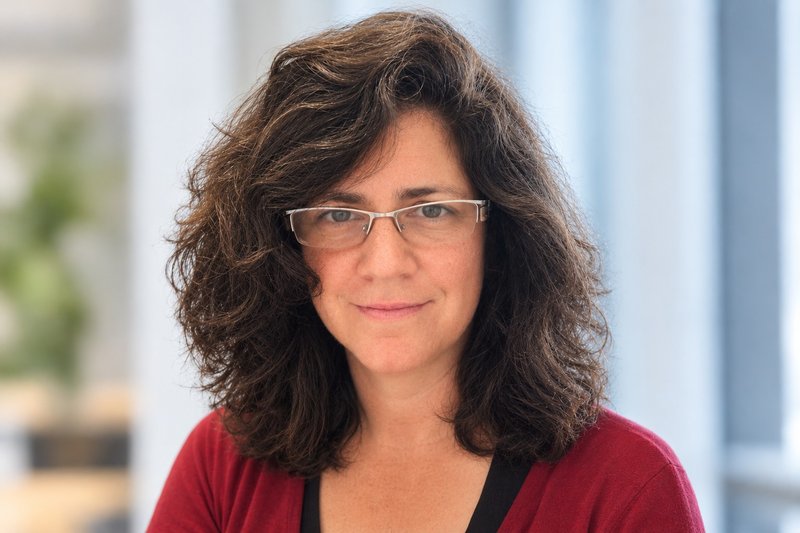
Dr. Noga Buber-Ben David is an anthropologist. She holds a PhD in Sociology and Anthropology from the Hebrew University of Jerusalem, where her dissertation examined social enterprises and the tension between social and economic logics. She also holds an MA in Organizational Studies and a BA in Philosophy and Political Science from the same university.
Her research interests include marginality, cultural economy, community, diversity, and pedagogy. As a postdoctoral fellow at the Center for Governance and Markets, University of Pittsburgh, and the Haifa Laboratory for Religious Studies, University of Haifa, she conducted ethnographic fieldwork on trust among Jewish, Muslim, and Christian religious leaders in Ramla, a mixed city in Israel. She is currently developing a new project on women, community, and belonging across cultural difference.
She teaches at the University of Augsburg and the Hebrew University of Jerusalem, where she previously headed the Humanities and Social Sciences track of the Preparatory Program at the Rothberg International School. Across teaching, academic leadership, and research, her work centers on students and communities from diverse cultural backgrounds.
Publications
Abbou, I., Gidron, B., Buber-Ben David, N., Greenberg, Y., Monnickendam-Givon, Y., & Navon, A. (2017). Social enterprise in Israel: The swinging pendulum between collectivism and individualism. Social Enterprise Journal, 13(4), 329–344. https://doi.org/10.1108/SEJ-09-2017-0043
Gidron, B., Abbou, I., Buber-Ben David, N., Navon, A., & Greenberg, Y. (2015). Social enterprise in Israel: The swinging pendulum between collectivism and individualism (ICSEM Working Papers No. 20). ICSEM Project. https://emes.net/icsem-working-papers/Israel_-_Gidron_et_al.pdf
Buber-Ben David, N. (2013). Les Tsiganes à Jérusalem. In C. Auzias (Ed.), Tsiganes en terre d’Israël (pp. 31–51). Indigène.