
Researchers Call for Environmental Agreements to Give Greater Consideration to Mental Health
Prof. Alkomiet Hasan of the University Psychiatric Clinic in Augsburg contributed to an opinion piece in the journal *Nature* on the links between the environment and mental health
Climate change, environmental pollution, and the loss of biodiversity harm not only the body but also mental health. This is demonstrated by an international team of authors—including Augsburg-based physician Prof. Dr. Alkomiet Hasan—in the journal *Nature*. The researchers are calling for international environmental agreements to take this connection more seriously in the future, as mental health is affected by environmental changes and their social consequences. Despite these connections, environmental policy and mental health have often been treated separately in international agreements and political strategies. For example, mental health plays hardly any role in the reporting and implementation mechanisms of many environmental agreements. At the same time, mental health and psychosocial well-being have rarely been used as criteria for evaluating the success of environmental measures. The authors classify international environmental agreements based on how directly their provisions relate to mental health and how well the corresponding impacts can be measured. The link is particularly strong in agreements on chemicals and hazardous waste. For example, regulations on mercury, persistent organic pollutants, or highly hazardous pesticides can help reduce the burden on the brain and nervous system. Restrictions on particularly hazardous pesticides can also limit access to substances used for self-poisoning. A key proposal from the team of authors is therefore to link environmental policy more closely to measurable health impacts. Existing data could be used in part for this purpose. Depending on the environmental issue, indicators could include, for example, children’s developmental and cognitive abilities, cases of poisoning, suicide rates, depression, anxiety disorders, or post-traumatic stress disorder. In the case of measures to protect the ozone layer, however, the authors expect more long-term and indirect effects. In their view, human rights provide an important cross-cutting perspective—particularly when it comes to protecting children, people with disabilities, and especially vulnerable population groups. “The crucial question is not whether environmental changes affect mental health, but how we translate this knowledge into concrete policy decisions. To do this, we need better links between environmental, health, and social policies,” said Hasan. The publication is a joint scholarly commentary by researchers from various countries and disciplines. It is not intended as a new clinical study, but rather as a proposal for greater integration of environmental and health policies and for a more systematic examination of the mental health consequences of environmental changes. 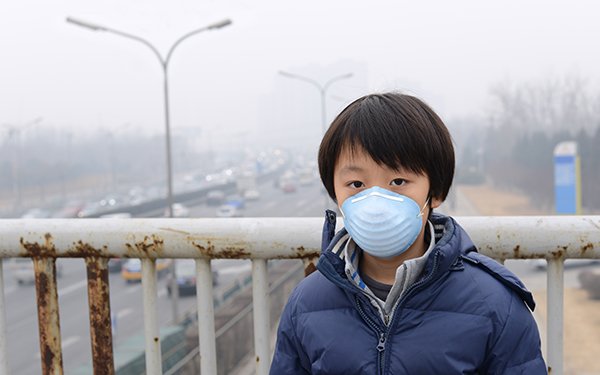
Thinking About International Environmental Policy and Mental Health Together
The authors therefore propose linking the two areas more systematically. Common indicators, appropriate funding criteria, concrete implementation tools, and accountability mechanisms could contribute to this.
“If we truly understand mental health as part of public health, we must not limit our approach to the treatment of mental illnesses. We must also focus on the living conditions that influence mental health. Environmental policy can be an important component of prevention in this regard,” says Prof. Dr. Alkomiet Hasan, holder of the Chair of Psychiatry, Psychotherapy, and Psychosomatics at the Medical Faculty of the University of Augsburg.Different Environmental Problems—Different Impacts
When it comes to climate change, biodiversity loss, land degradation, and disasters, the connections are more complex. Climate-related extreme events, droughts, the loss of livelihoods, or displacement from one’s home can exacerbate mental health challenges. At the same time, the conservation of nature and ecosystems can also contribute to well-being.Measurable Goals for a Joint Health and Environmental Policy
Article from Augsburg Published in an International Scholarly Journal
Prof. Dr. Alkomiet Hasan, Professor of Psychiatry and Director of the Department of Psychiatry, Psychotherapy, and Psychosomatics at the University of Augsburg, is one of eight authors.
Publication: Kumar, M., Ojo, T. M., Hijazi, Z., Lukorito, C., Hassell, J. M., Hasan, A., Luykx, J. J., & Brandt, L. (2026). Why environmental treaties must also address mental health. Nature, 656, 292–296.
https://doi.org/10.1038/d41586-026-02450-3
Scientific contact
Media contact