
Experiencing Wetlands: Coastal Marshes as Contested Landscapes in Seventeenth- and Eighteenth-Century England in a European Context
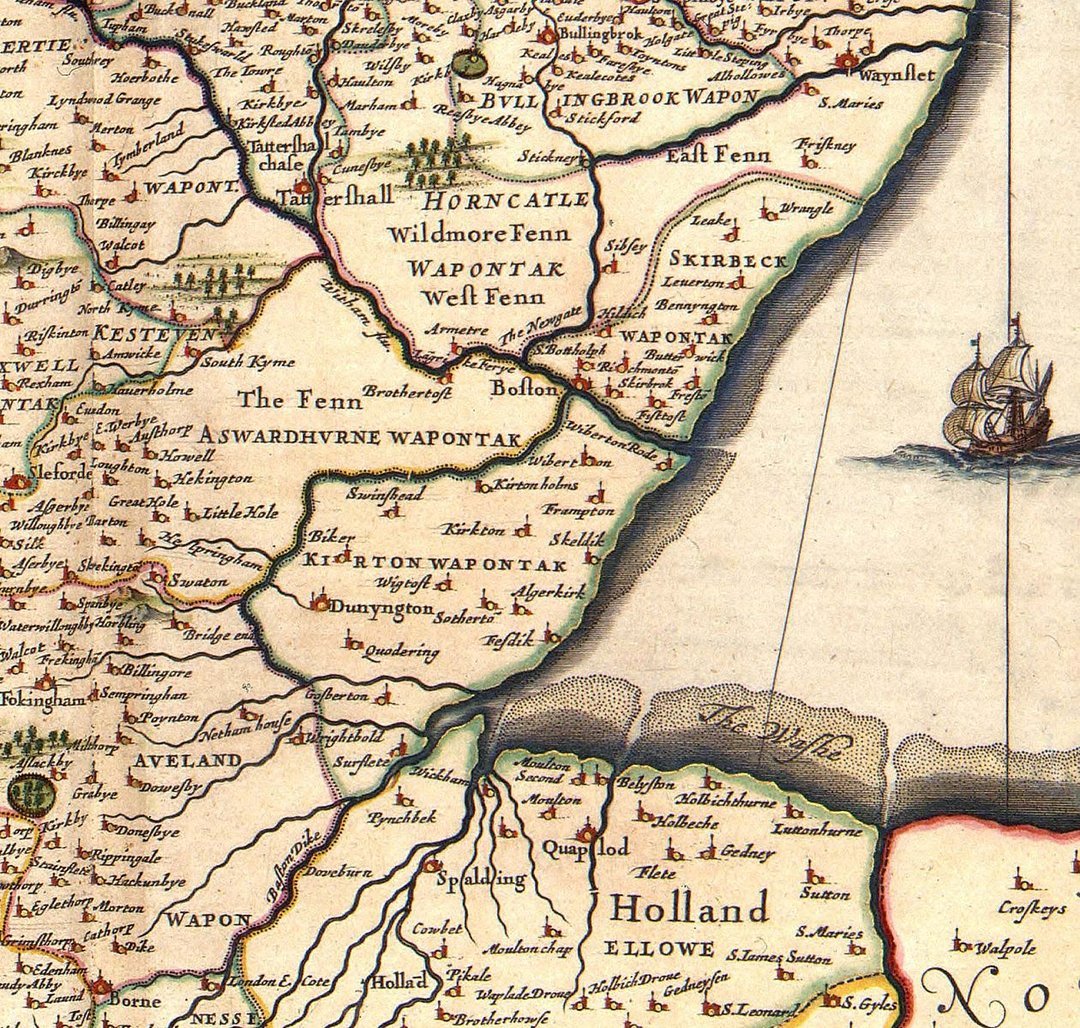
The project focuses on coastal wetlands and how they are perceived by people who lived in and with these regions or viewed them from outside and subjected them to their own norms. The specific subject of investigation is the East Anglian Fens, but this will be embedded in European perceptions and developments.
Building on the desiderata identified for the overall project ‘Thinking with Wetlands’, the proposal identifies the following five starting points for a new look at the Fens:
1. Previous research has focused heavily on drainage and the efforts of the authorities to achieve it, especially in the years c. 1630 to 1660. 2. On the one hand, research with a strong economic history focus has perpetuated the optimism about progress associated with past drainage efforts, while on the other hand, protest research has focused on contemporary resistance. 3. Previous research has therefore been characterised by dichotomous assumptions, for example between narratives of progress and loss. 4. Anachronistic categories, for example in relation to existing knowledge, continue to shape the interpretation of past actions to this day. 5. Technological and administrative-historical aspects have been strongly emphasised and related to the ‘state’ as an actor.
In line with and as a substantial contribution to the overall project, the sub-project aims to break down dichotomous, anachronistic and partly teleological narratives and focus on contemporary perspectives. It is about the diversity of different interpretations and narratives, competing forms of knowledge and heterogeneous actors. It aims at the inclusion of later developments up to the 18th century and the beginning of the Enlightenment, so that a direct transition to the inland project can be established. Finally, it is broadening the perspective and situating English developments in a European context (the Netherlands, Italy, France are to be considered as examples). The diversity of perceptions and interpretations, which is reflected in thoroughly asymmetrical discourses, is a decisive part of the research design, according to which subaltern, local and also female perspectives are to be elaborated more strongly than has been the case to date. This is intended to question and supplement a focus on ‘state’ actors. The project also contributes to a longer-term historical semantics of wetlands and thus to the metaphors project. For the intended longue durée approach, a chronological starting point before the beginning of the Enlightenment is of crucial importance.