
Vortragsreihe Medical Information Sciences
Vortragsreihe Medical Information Sciences
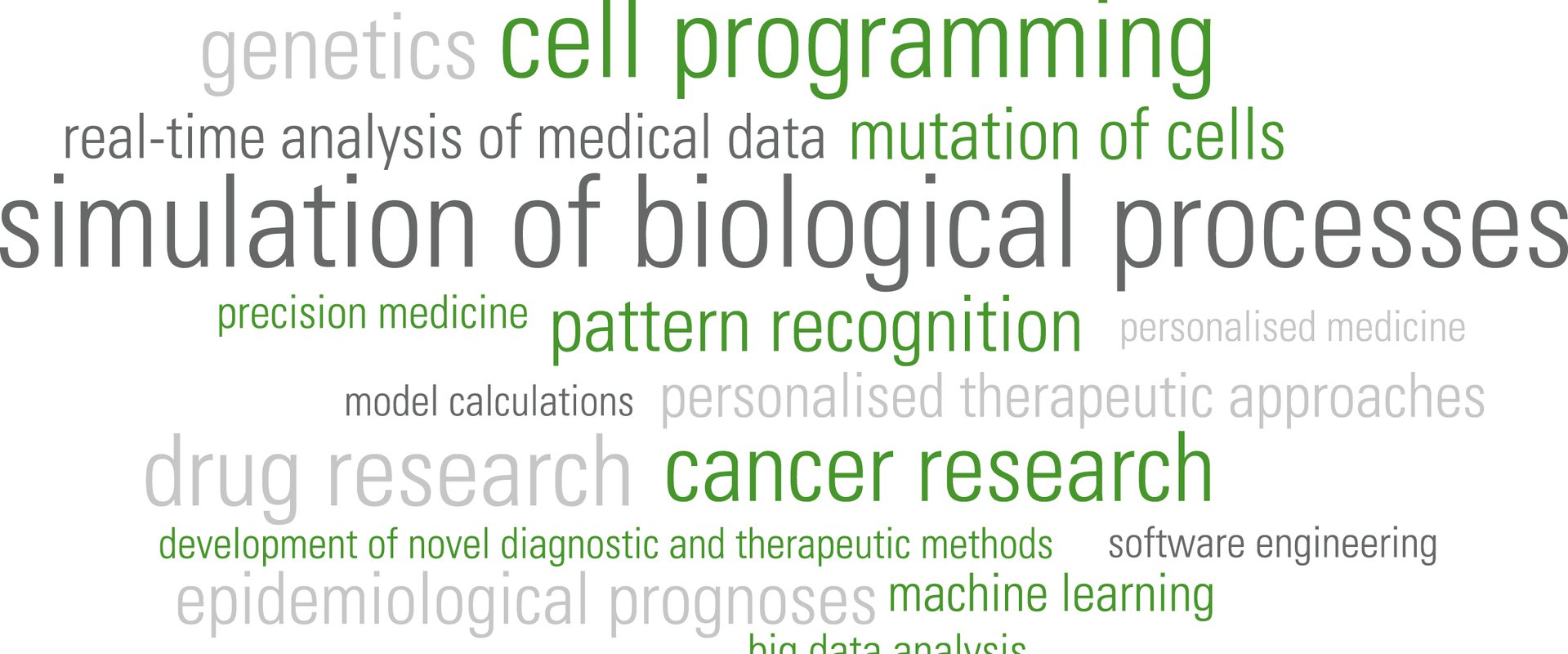
Die Zukunft der medizinischen Forschung und Versorgung ist personalisiert, digitalisiert und datengetrieben. Bereitstellung, Analyse und Interpretation dieser Daten sind auf disziplinübergreifende Kooperationen angewiesen. Auf diese Weise entstehen an der Schnittstelle von Medizin und Informatik die Grundlagen für medizinischen Fortschritt.
Eine Reaktion auf diese Entwicklung ist der sukzessive Auf- und Ausbau des Forschungs- und Studienschwerpunktes Medical Information Sciences am Standort Augsburg. Im
Wintersemester 2022/2023 fand erstmalig eine gleichnamige Vortragsreihe statt, die aktuelle Fragestellungen aus der Wissenschaft thematisiert und Einblicke in entsprechende Forschungsbereiche und Anwendungsgebiete gibt.
Die Veranstaltungen der Vortragsreihe Medical Information Sciences finden in diesem Wintersemester immer donnerstags um 16:00 Uhr an der Fakultät für Angewandte Informatik in Hörsaal N2045 statt. Falls Sie Interesse an einem Zugriff auf den geteilten, elektronischen Kalender der Vortragsreihe haben, schreiben Sie gerne eine E-Mail an office.bioinf@informatik.uni-augsburg.de.
Die Veranstaltungen werden außerdem bei Bedarf per Livestream an die vier Standorte der CCC-WERA-Allianz übertragen. Wir bitten bei Interesse an der Teilnahme am Livestream um eine kurze persönliche Anmeldung per E-Mail an office.bioinf@informatik.uni-augsburg.de.
Nähere Informationen zu den Referentinnen und Referenten sowie zu deren Voträgen erhalten Sie rechtzeitig an dieser Stelle sowie regelmäßig über den offiziellen MIS-Newsletter, für den Sie sich unten auf dieser Seite registrieren können.
Die Vorträge richten sich an ein interessiertes Fachpublikum. Vortragssprache ist Englisch.
Für jeden Einzeltermin sind bei der Bayerischen Landesärztekammer (BLÄK) zwei Fortbildungspunkte im Rahmen der Continuing Medical Education (CME) beantragt. Interessierte Ärztinnen und Ärzte können sich über eine Nachricht an IDM-Sekretariat@uk-augsburg.de vorab für eine Teilnahme an der CME-Fortbildung registrieren. Eine offizielle Bestätigung für Ihre Teilnahme erhalten Sie im Anschluss an den jeweiligen Termin.
Im Vorlauf der Vorträge wird zudem die Möglichkeit zur Wahrnehmung einer persönlichen Sprechstunde mit der oder dem Vortragenden des jeweiligen Tages angeboten, um sich bspw. über wissenschaftliche Fragestellungen, Forschungsthemen oder Kooperationsmöglichkeiten auszutauschen. Bei Interesse bitten wir Sie, sich rechtzeitig über eine Nachricht an office.bioinf@informatik.uni-augsburg.de für einen Sprechstundentermin anzumelden.
Im Folgenden finden Sie den Ablaufplan für das Sommersemester 2025 mit weiterführenden Informationen zu den einzelnen Vorträgen:
ABLAUFPLAN
Veranstaltungsort: Hörsaal N2045 (Fakultät für Angewandte Informatik)
Abstract
Natural Language Processing (NLP) plays a crucial role in analyzing medical text for risk detection and improving patient-doctor communication. However, working with sensitive clinical data presents significant challenges, particularly in anonymization and patient privacy protection.
This talk will focus on privacy-preserving NLP, specifically anonymization techniques that go beyond direct identifiers to address risks from implicit information. I will discuss methods and challenges of de-identifying medical text while preserving its utility for downstream tasks such as risk prediction and clinical decision support. Beyond privacy, I will address how NLP can be leveraged for early risk detection: From multilingual adverse drug reaction detection to mental health risk assessment on social media and relapse prediction in psychotherapeutic settings.
Referent: Dr. Lisa Raithel
Kurzbiographie
Dr. Ratihel is a post-doc at Technische Universität Berlin at the Quality and Usability Lab and BIFOLD and a guest researcher at DFKI GmbH. She obtained her master’s degree at Universität Potsdam in Computational Linguistics (B.Sc. in Computational Linguistics, M.Sc. in Cognitive Systems). Then worked as a software engineer before transitioning back to academia for a double degree PhD program (cotutelle) at TU Berlin and Université Paris-Saclay. She was supervised by Prof. Sebastian Möller and Pierre Zweigenbaum, Directeur de Recherche CNRS. Her doctoral research focused on cross-lingual information extraction for the detection of adverse drug reactions. During that time, she spent one year at LISN in Orsay, France (2021 - 2022) and three months at the Social Computing Lab at NAIST in Nara, Japan (2023). In February 2024, she successfully defended her thesis at TU Berlin.
Veranstaltungsort: Hörsaal N2045 (Fakultät für Angewandte Informatik)
Abstract
The body of published biomedical literature is growing at a rate that challenges manual management. Large Language Models (LLMs) enable large-scale processing of textual information and have the potential to enable a step change in how we can use evidence and research through detailed and flexible automation of information extraction. In this presentation, I will present recent progress towards harnessing LLMs to accelerate systematic reviewing and the translation of evidence into personalised treatments, with applications in mental health and oncology.
Referent: Prof. Dr. Janna Hastings
Kurzbiographie
Janna Hastings was born in Cape Town, South Africa where she completed undergraduate studies in Mathematics and Computer Science. Thereafter, she moved to Cambridge, UK to join the Cheminformatics and Metabolism group at the European Bioinformatics Institute (2006-2015) and obtained her PhD in Computational Biology from the University of Cambridge (2015-2019) studying the role of metabolism in healthy aging using multi-omics data and a time-series modelling approach. Since August 2022 she is Assistant Professor of Medical Knowledge and Decision Support at the Institute for Implementation Science in Health Care, Faculty of Medicine, University of Zurich, and Vice-Director of the School of Medicine at the University of St. Gallen. She is also an Associate at the Centre for Behaviour Change at University College London, and Group Leader of the Swiss Institute for Bioinformatics. The focus of her current research is on AI in medicine.
Veranstaltungsort: Hörsaal N2045 (Fakultät für Angewandte Informatik)
Abstract
Human trabecular bone is a structural, calcified tissue of struts and plates with cavities containing bone marrow. Determining its mechanical properties can support the design of patient-specific implants, e.g., for total hip- or knee arthroplasties. The effective stiffness is obtainable based on the direct discretization of microfocus computed tomography (mCT) data. However, the Finite Element Analysis (FEA) based analytical approach is computationally expensive and requires high-performance computing (HPC) resources that are unsuitable in daily clinical context. Our research introduces an artificial intelligence (AI) centric method to determine the effective stiffness of human trabeculae with sufficient accuracy at a fraction of the computational cost of current analytical implementations. This talk furthermore shows the data, training process, and validation of the biomechanical results with the analytical state-of-the-art method as the ground truth. Furthermore, we will describe the limits and outlook for contributing to patient-specific mechanical characterizations.
Referent: Johannes Gebert
Kurzbiographie
Johannes Gebert has about 10 years of experience as a design, structural, and software engineer. His graduate studies connected him to the High-Performance Computing Center Stuttgart (HLRS). He joined as a PhD student of Prof. Resch to work on the interface of domain-specific research with HPC. The PhD report, submitted in June 2024, describes a novel method to calculate anisotropic elasticities of human trabeculae in vivo. A research visit at the Innovative Computing Laboratory (ICL) at the University of Tennessee, Knoxville (UTK), strengthened his background in HPC. He joined HLRS in a permanent position to focus on innovative computing machinery to accelerate the computational capabilities of future research.
Veranstaltungsort: Hörsaal N2045 (Fakultät für Angewandte Informatik)
Abstract
Surgical Data Science is a rapidly evolving interdisciplinary field that aims to improve the quality, safety, and value of interventional healthcare through data acquisition, organization, analysis, and modeling. Over the past decade, advances in deep learning, computational power, and collaborative medical data initiatives have driven significant progress in computer vision and natural language processing within the surgical domain.
This talk will explore the emerging role of foundation models, large models pre-trained on broad data using self-supervised learning, and their ability on a wide range of clinically relevant tasks, often with minimal labeled data. I will review recent surgical image and video-based foundation model developments, discuss key downstream applications, and highlight common pitfalls in benchmarking their performance. Additionally, I will present current strategies for leveraging large language models (LLMs) to standardize surgical metadata and improve data interoperability at scale.
Referent: Dr. Ömer Sümer
Kurzbiographie
Dr. Ömer Sümer is a postdoctoral researcher in the Division of Intelligent Medical Systems at the German Cancer Research Center (DKFZ) in Heidelberg, Germany. His research lies at the intersection of artificial intelligence, behavior analysis, and healthcare, with a particular focus on predictive modeling, scene understanding, and human-AI interaction in medical imaging and clinical decision-making. Dr. Sümer is leading the development of video and video-language foundation models on a curated collection of minimally invasive surgical videos sourced from multiple clinical sites and a wide range of procedures. His work aims to enhance AI-based automated tasks and medical decision-support systems.
He completed his Ph.D. at the University of Tübingen, where he explored automated multimodal analysis of student activities in classroom environments. Before joining DKFZ, he was part of the Human-Centered Artificial Intelligence group (led by Prof. André) at the University of Augsburg, focusing on emotion recognition and facial phenotyping for rare genetic diseases.
Veranstaltungsort: Hörsaal N2045 (Fakultät für Angewandte Informatik)
Abstract
Global Health Informatics has become a cornerstone of equitable healthcare delivery and disease surveillance across low- and middle-income countries. This talk traces the historical evolution of the field, highlighting pivotal success stories. Drawing on field experiences, the presentation explores how global partnerships and digital innovations have transformed health systems in resource-constrained settings. At the same time, it critically examines current challenges: the fragmentation of data ecosystems, ethical and infrastructural barriers, and, most urgently, the shifting political landscape. Recent funding cuts in the United States threaten the sustainability of key global health programs, underscoring the need for resilience, diversification of funding, and renewed commitment to digital health equity. The session concludes by outlining strategic priorities for the next decade—advancing responsible innovation, capacity building, and governance frameworks to ensure global health informatics continues to serve the most vulnerable populations.
Referent: Dr. Felix Holl
Kurzbiographie
Dr. Felix Holl, MPH, M.Sc., FAMIA has been Deputy Director of the DigiHealth Institute at Neu-Ulm University of Applied Sciences since 2024, where he leads research and the implementation of digital innovations in healthcare. He has been working at the DigiHealth Institute since 2018, initially as a research associate and, since 2023, as a postdoctoral researcher. Dr Holl earned his doctorate (Dr rer. biol. hum.) in Medical Informatics in 2023 from Ludwig Maximilian University of Munich and completed a postgraduate degree in Public Health at UMIT in Austria.
Before joining HNU, Dr Holl spent two years at the Institute for Global Health Sciences at the University of California, San Francisco (UCSF), as a Global Health Informatics Specialist. Prior to that, he obtained an M.Sc. in Global Health Sciences from UCSF as a Fulbright Scholar.
His research focuses on the evaluation of health informatics projects and the use of informatics in global health and international disaster response. Dr Holl chairs the Global Health Informatics Working Group of the American Medical Informatics Association. He serves as Associate Editor at npj Digital Public Health and is a member of the editorial boards of BMC Digital Health, PLOS Digital Health, and Digital Health (SAGE).
Dr Holl has many years of experience in pre-hospital emergency medicine. He works part-time as a consultant for health information systems at the German Red Cross and serves as a delegate for international emergency aid for the German Red Cross, the IFRC, and the WHO.
Veranstaltungsort: Hörsaal N2045 (Fakultät für Angewandte Informatik)
Abstract
Clinical gait analysis is a central approach for assessing human gait function, enabling accurate diagnoses and effective treatment plans. Instrumented 3D gait analysis, the gold standard, provides detailed biomechanical insights but remains laboratory-bound and time-intensive. Artificial Intelligence (AI), specifically machine learning, has demonstrated significant potential for advancing gait analysis. However, the implementation of machine learning models in clinical practice is hindered by the "black-box" nature of state-of-the-art models, particularly those based on deep learning algorithms. In response, the field of eXplainable AI (XAI) has received increasing attention in recent years. XAI methods provide insights into how machine learning models operate and how they make their predictions. This talk presents research applying XAI methods in gait analysis, demonstrating their capacity to enhance model transparency, improve evaluation frameworks, and uncover novel biomechanical insights.
Referent: Dr. Fabian Horst
Kurzbiographie
Fabian Horst is a senior researcher at the Institute of Sport Science, Johannes Gutenberg-University Mainz (Germany). He holds a Diploma in Sports Engineering from the Otto-von-Guericke University Magdeburg (Germany) and a PhD from the Johannes Gutenberg-University Mainz (Germany). During his PhD, Fabian pioneered the introduction of eXplainable Artificial Intelligence (XAI) methods to the field of biomechanics to investigate the uniqueness and persistence of individual gait patterns. His research integrates human movement science, data science, biomechanics, and motor learning. His primary goal is to develop reliable and trustworthy XAI-based approaches for personalised movement analysis. These approaches aim to support the tailoring of diagnoses and treatments to individual needs, thereby enhancing outcomes in research, clinical, and sports contexts.
Veranstaltungsort: Hörsaal N2045 (Fakultät für Angewandte Informatik)
Abstract
This presentation explores the potential of artificial intelligence in analyzing multimodal health data, with specific emphasis on electrophysiological signals and medical imaging. The work addresses critical challenges in developing robust, generalizable AI systems for healthcare applications through three interconnected research directions.
The first part examines deep learning approaches for electrocardiogram (ECG) analysis, addressing fundamental limitations in current methodologies. We focus on the critical issues of model generalizability across diverse patient populations and clinical settings, uncertainty quantification in diagnostic predictions, and local calibration techniques to ensure reliable performance in real-world deployment scenarios.
The second section presents advances in magnetic resonance imaging (MRI) reconstruction and super-resolution techniques. We introduce novel approaches leveraging implicit neural representations within unbiased and self-supervised learning frameworks, eliminating the need for extensive paired training data while maintaining high-quality image reconstruction performance.
The presentation concludes with a forward-looking perspective on multimodal fusion, exploring how joint learning of ECG signals and cardiac medical images can be integrated to develop comprehensive digital twins of the human heart. This integrated approach promises to revolutionize personalized cardiac care by providing unprecedented insights into individual cardiac function and pathology.
Referent: Dr. Julien Oster
Kurzbiographie
Dr. Julien Oster is a Senior Research Associate at IADI, INSERM in Nancy, France, where they have been conducting his research since 2016. His work focuses on developing novel machine-learning techniques combined with and inspired by modeling to create interpretable automatic decision-making systems in healthcare, with particular emphasis on cardiovascular health data.
Dr. Oster earned his PhD in Biomedical Signal Processing from Université de Lorraine, Nancy, France in 2009. Following his doctoral studies, he gained diverse international research experience, serving as a Research Engineer at CSEM in Neuchâtel, Switzerland (2010-2011), before joining the University of Oxford as a Postdoctoral Research Assistant at the Institute of Biomedical Engineering (2011-2016).
His contributions to biomedical engineering have been recognized through several prestigious awards and fellowships. In 2011, he was awarded the Newton International Fellowship from the Royal Society (UK), which enabled him to join the University of Oxford. The following year, he was honored with the J.A. Lodge Award from the Institute of Engineering and Technology (IET) in recognition of his promising early career in biomedical engineering. Most recently, in 2023, he received the Prix Suzanne Zivi from Université de Lorraine, an award recognizing outstanding young researchers under 40.
Dr. Oster's research lies at the intersection of machine learning, biomedical modeling, and clinical decision support systems, with a commitment to developing interpretable AI solutions that can enhance cardiovascular healthcare outcomes.
Veranstaltungsort: Hörsaal N2045 (Fakultät für Angewandte Informatik)
Abstract
In his lecture Prof. Tran-Gia will provide an overview of current challenges and developments in the dosimetry of radiopharmaceutical therapies, with a focus on harmonization and strategies to accelerate quantitative SPECT/CT.
Referent: Prof. Dr. Johannes Tran-Gia
Kurzbiographie
Johannes Tran-Gia is a medical physicist and professor of Multimodal Imaging and Theranostics, specializing in quantitative imaging and dosimetry. After completing his physics studies at the University of Würzburg and Heriot-Watt University in Edinburgh, he earned his PhD in quantitative MRI in 2015 at University Hospital Würzburg, supported by the German Excellence Initiative. He later gained certification as a medical physics expert while advancing research in molecular radiotherapy dosimetry. Johannes Tran-Gia is known for pioneering 3D-printed anthropomorphic phantoms for validating SPECT/CT imaging technologies and driving harmonization and standardization efforts in molecular radiotherapy dosimetry through EU projects like "MRTDosimetry" and "AlphaMet." His work also focuses on AI-based imaging enhancement and bone marrow dosimetry. An active member of international committees, including the EANM Dosimetry Committee and Scientific Programme Council, Johannes plays a leading role in advancing quantitative imaging and theranostics.
Veranstaltungsort: Hörsaal N2045 (Fakultät für Angewandte Informatik)
Abstract
The progression of diseases is a dynamic process, with clinical data providing insights into the trajectories of individual patients. However, individual patient data are often sparse, making it challenging to distinguish between natural variations and detrimental changes. Integrating data from different individuals is essential for robust analysis.
We explore the use of population-level models to integrate sparse datasets from individual patients. First, we employ nonlinear mixed-effects models to describe heterogeneous patient populations. To leverage large patient cohorts with limited information per individual, we introduce a novel inference scheme based on neural posterior approximation. Additionally, we utilize multi-state stochastic models to analyze patient trajectories, focusing on sparse longitudinal observations. Finally, we apply federated learning techniques to enhance data accessibility and integration across multiple clinical institutions.
Our application of neural posterior approximation demonstrated effective integration and analysis of large, sparse datasets, providing insights into patient heterogeneity. The multi-state stochastic models facilitated the understanding of breast cancer metastasis development and the impact on different patient subgroups. Federated learning improved data accessibility, enabling more comprehensive analysis without compromising patient privacy.
Referent: Prof. Dr.-Ing. Jan Hasenauer
Kurzbiographie
Jan Hasenauer studied technical cybernetics at the University of Stuttgart and the University of Wisconsin, Madison. After his studies, he received his PhD in Systems Biology in February 2013. A few months later, he became team leader at the Institute of Computational Biology at Helmholtz Zentrum München. In 2015, he was awarded an independent junior research group at Helmholtz Zentrum München. Since October 2018, he is professor for Mathematics & Life Sciences at the University of Bonn. Since 2024, he is leading the newly established Bonn Center for Mathematical Life Sciences and holds an ERC Consolidator Grant. The research of Jan Hasenauer focuses on the development of methods for data-driven modelling of biological processes. These methods enable model-based integration of different data sets, critical evaluation of available information, comparison of different biological hypotheses and tailor-made selection of future experiments.
Veranstaltungsort: Hörsaal N2045 (Fakultät für Angewandte Informatik)
Abstract
High-throughput technologies are becoming increasingly important in discovering prognostic biomarkers and in identifying novel drug targets. With various prognostic molecular signatures, cancer serves as a paradigmatic example of the utility of high-throughput data in identifying prognostic biomarkers, often distilled into relatively short gene lists. Such gene lists can be obtained as a set of features (genes) that are important for the decisions of a Machine Learning (ML) method applied to high-dimensional gene expression data. This high-dimensional data can be structured by graphs, which are very common in the biomedical domain. For instance, a patient can be represented by a protein-protein interaction (PPI) network where the nodes contain the patient-specific omics features. Graph Neural Networks (GNNs) can classify these graph-based representations.
Explanation methods applied to GNNs produce explanations of individual predictions that can be utilized to construct patient-specific subnetworks. When aggregated across patients, these explanations enable model-wide feature selection. In this talk, I will discuss both aspects and present a methodology to: (i) derive patient-specific subnetworks that are potentially valuable for precision medicine approaches, and (ii) systematically and quantitatively analyze the stability, impact on classification performance, and biological interpretability of the model-wide selected feature sets. Finally, I will present our Ensemble-GNN approach for classifying graph-structured data, which can be used to deploy federated, ensemble-based GNNs in Python.
Referent: Dr. Hryhorii Chereda
Kurzbiographie
Dr. Chereda is a postdoctoral researcher at the Biomedical Network Science Lab within the Department of Artificial Intelligence in Biomedical Engineering at Friedrich-Alexander University Erlangen-Nürnberg (FAU). As a member of the Graduate Centre at the Bavarian Research Institute for Digital Transformation (bidt), his research focuses on advancing the translational potential of AI in cancer biology. He previously worked as a postdoctoral researcher and research assistant at the Department of Medical Bioinformatics at the University Medical Center Göttingen, where he developed federated machine learning models and explainable AI (XAI) approaches. Dr. Chereda received his PhD in Bioinformatics (summa cum laude) from the Georg August University of Göttingen, as part of the International Max Planck Research School for Genome Science (IMPRS‑GS). Dr. Chereda holds a Master’s and Bachelor’s degree in System Analysis and Control from the Kyiv Polytechnic Institute, Ukraine.
Abonnement des MIS-Newsletters
Wir freuen uns über Ihr Interesse am Forschungs- und Studienschwerpunkt Medical Information Sciences!
Über das folgende Anmeldeformular können Sie den regelmäßigen Erhalt von aktuellen Informationen sowie Hinweisen zu Veranstaltungen mit Bezug zum Schwerpunkt MIS anfordern.
Anmeldeformular
Datenschutzhinweis
Mit dem Abonnement unserer Medien stimmen Sie sowohl der Verarbeitung Ihrer Daten für den Versand der ausgewählten Medien als auch den Datenschutzrichtlinien der Universität Augsburg zu. Die erhobenen Daten dienen ausschließlich dem Versand der von Ihnen ausgewählten Medien und der Dokumentation Ihrer diesbezüglichen Zustimmung. Es erfolgt keine anderweitige Verarbeitung und keine Weitergabe der Daten an Dritte.
Sie können Ihr Abonnement und die Einwilligung zur Speicherung Ihrer Daten jederzeit ohne Angabe von Gründen widerrufen. Bitte schicken Sie hierzu eine formlose E-Mail an office.bioinf@informatik.uni-augsburg.de.